MECHANICAL ENGINEERING · ZURICH

Joseph
Rizk.

From aerodynamic surfaces
to systems that move.

MSc Mechanical Engineering at ETH Zurich.
EPFL graduate focused on AI and control systems, with experience in aerodynamics and mechanical design.

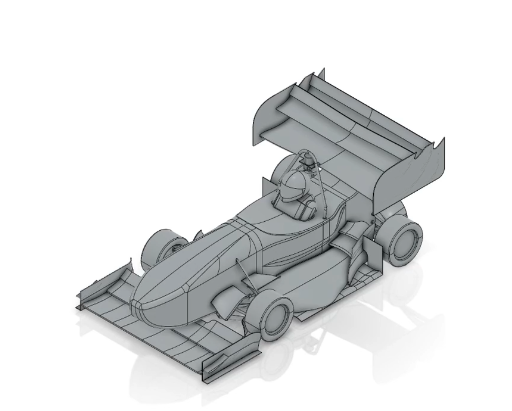
Formula Student baseline V3 CAD assembly from the Bachelor report
01 / BACHELOR PROJECTFormula Student aerodynamicsView project ↗
AerodynamicsMechanical designStructural simulationControl systems

01 / ABOUT

Design. Simulate.
Understand.

I’m a mechanical engineering graduate from EPFL, now pursuing my master’s at ETH Zurich with a focus on AI and control systems.

My work spans Formula Student aerodynamics, an autonomous harvesting robot, composite structural analysis and computational tools. I enjoy connecting mechanical design with simulation and control to understand how a system behaves.

Beyond engineering, I served as Secretary General and Advisor for the Lebanese Students Association in Lausanne from 2024 to 2026, supporting communication and organisation for a community of more than 200 members. I also practise CrossFit and endurance running.

Based in Zurich, SwitzerlandFrench · English · Arabic

02 / PROJECTS

Engineering in practice.

From CAD and numerical analysis
to integrated physical systems.

Formula Student baseline V3 CAD assembly, Figure 3.7 from the Bachelor report
Bachelor report · Figure 3.7, baseline V3 · Open image ↗
01 / Aerodynamics2026

Formula Student rear wing

Bachelor Project · EPFL Racing Team

Design and CFD-led iteration of a multi-element rear wing, exploring how airfoil choice, loading and flow separation shape aerodynamic performance.

  • CAD
  • ANSYS Fluent
  • CFD
Explore project

Contribution & approach

Rear-wing design and optimisation within the team’s bachelor project, Design of an Aero Kit and CFD Workflow Development. Compared three- and four-element configurations, varying airfoil profiles, chord lengths and angles of attack within the report’s draft 2027 design envelope.

Used velocity contours, pressure coefficients and total-pressure analysis to interpret stall and loading at the symmetry plane and near the endplates. The study examined MSHD and S1223 profiles and the influence of upstream vehicle geometry.

What the study found

The report records 259 N for the best four-element iteration, 15R19. The three-element reference produced 256.62 N on vehicle baseline V3 and 259 N on V2. These simulation results did not establish a clear performance advantage from adding a fourth element; stall management and load distribution remained central challenges.
02 / Robotics & computer vision2025

Autonomous raspberry-harvesting robot

Third-year engineering project · EPFL

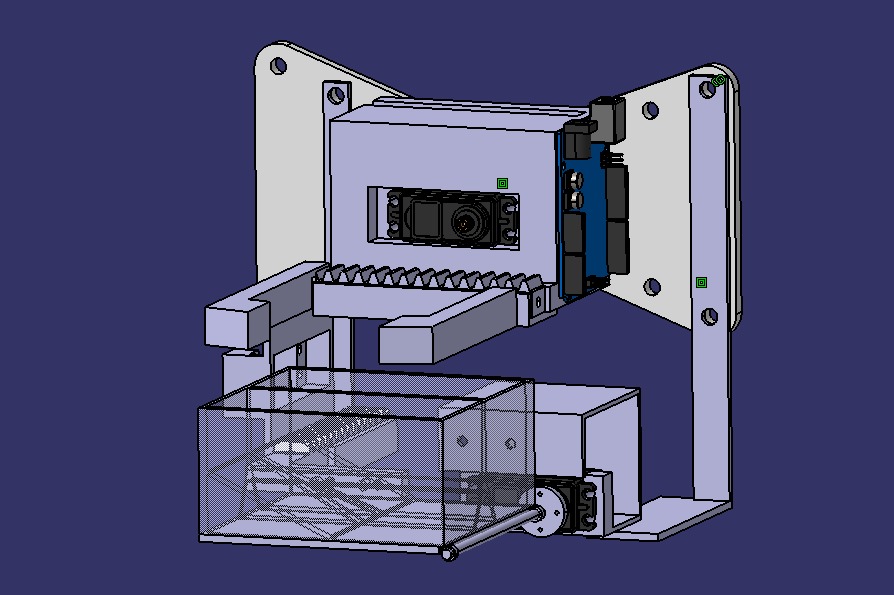
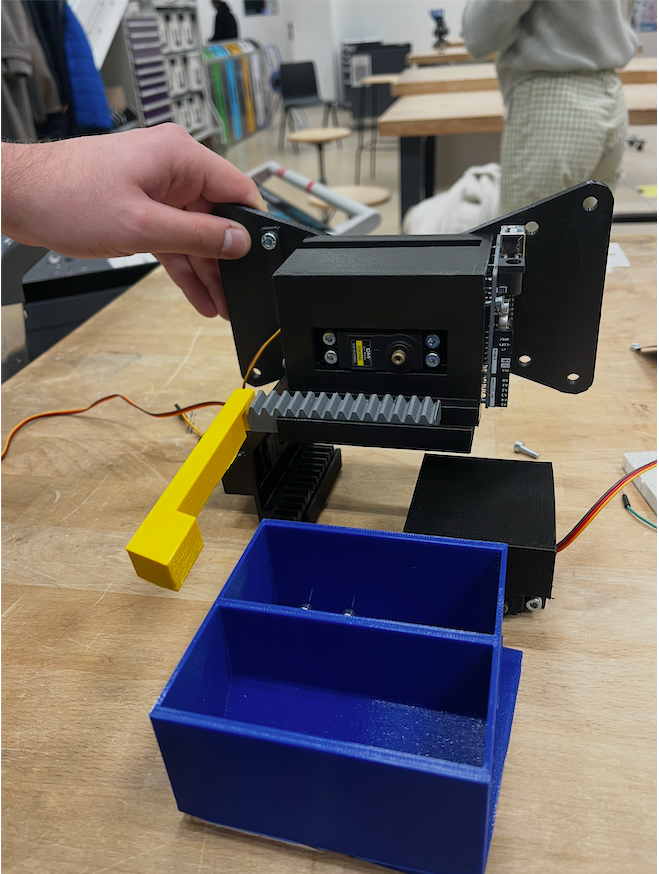
From CAD to a working prototype: a camera-guided harvesting mechanism that classifies raspberries by ripeness and size, then directs them into collection baskets.

  • CAD
  • Computer vision
  • Actuation
  • Embedded control
Explore project

From CAD to an integrated mechanism

We began with the CAD design, then integrated a camera and actuators into the physical prototype. The gripper used one fixed finger and one moving finger, with a gear-driven mechanism providing lateral movement.

Detecting ripeness and size

The vision code analysed colour within an image region to distinguish ripe from unripe raspberries. It then detected each fruit’s contour and estimated its size from its pixel extent, classifying it as small or large. This combined colour-based ripeness detection with an image-based size estimate.

Harvesting and sorting

After release from the gripper, the raspberries dropped into a receiving basket. A separate actuator tipped or redirected this basket to discharge the fruit into the appropriate collection basket at the end of the sequence.

The project brought together mechanical design, camera-based perception, actuator integration and the coordination of gripping and sorting.

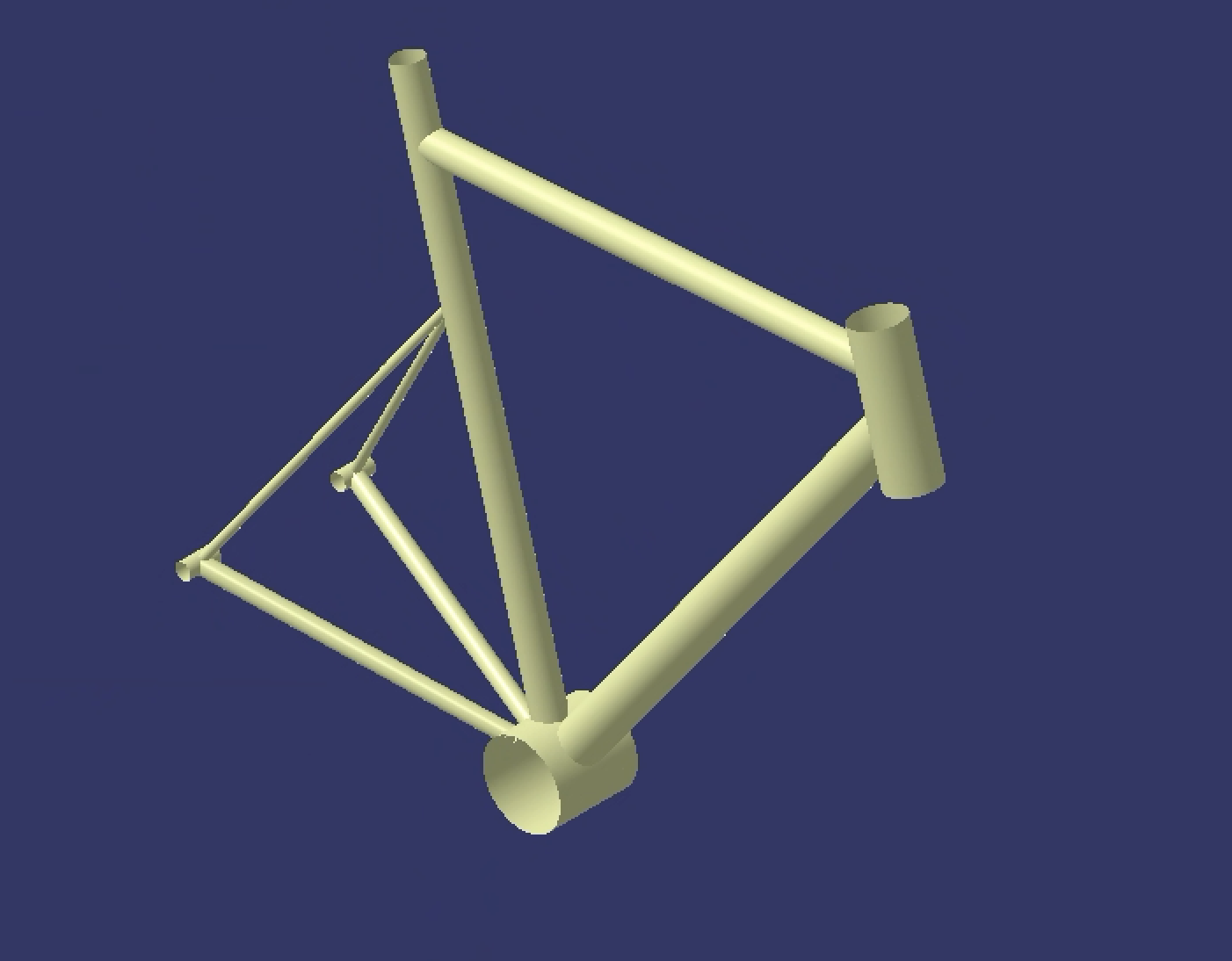
Bicycle-frame CAD model extracted from the FEM project report
CAD image from FEM report · Open full image ↗
03 / Structural simulation2026

Composite bicycle-frame analysis

Finite element methods · EPFL ME-373

Finite element analysis of a carbon-fibre bicycle frame under rider loading, a simplified turning load case, plus a study of its natural vibration modes.

  • CATIA V5
  • Abaqus/Standard
  • Composite layups
Explore project

Modelling & methods

Co-authored a study with Marco Sfeir and Alexandre El Ashi. Modelled the tubular frame in CATIA V5 and analysed it in Abaqus using S4R shell elements and an anisotropic, linear-elastic carbon-fibre layup: five 0.2 mm plies oriented at +30°, +15°, 0°, −15° and −30°.

Ran two linear-static load cases and a modal analysis. Refined the mesh and compared stress, displacement, strain and natural frequencies against a 5% relative-change convergence criterion.

Findings & scope

Identified critical regions at tube junctions, the seat tube and bottom bracket. The modal study reported a first retained natural frequency of 18.352 Hz after excluding a near-zero residual rigid-body mode. The final 4-to-3 mm refinement gave changes below 1.1% for the four frequencies tabulated in the convergence study.

These are numerical findings under simplified loads and idealised connections. Composite-specific failure criteria, transient loading and experimental validation were recommended as further work.

04 / Scientific computing & control systems2024–2025

From a tilted graph to usable data

System Modelling and Control · BA3 project · EPFL

An end-to-end C, MATLAB and LabVIEW pipeline that turns a photographed, tilted graph into extracted coordinates and a clean reconstructed plot.

  • C
  • MATLAB
  • LabVIEW
  • Image processing
Explore project

1. Extract the points in C

The C program read the image’s pixel data, identified the graph corners and coloured traces, and extracted the coordinates of the points belonging to each trace. It exported these coordinates for numerical processing.

2. Reconstruct the graph in MATLAB

MATLAB took the extracted points, ordered the four corners and computed a projective transformation to correct the tilted graph. It converted pixel coordinates into time and voltage, then reconstructed a clean plot.

The processing also fitted sinusoidal and cubic-polynomial models, selecting the model with the lower root-mean-square error.

3. Connect the workflow in LabVIEW

LabVIEW connected the stages: preparing the image data, running the C extraction, passing the results into MATLAB and producing the graph and output files. The result was one coordinated workflow from image input to numerical data and visualisation.

05 / Mechanical design2023–2024

Forest wrench: from requirements to a complete system

First-year engineering project · EPFL

Developed a complete mechanical system from a supplied specification, working through gear calculations, transmission ratios and weight constraints before completing the CAD design.

  • Gear calculations
  • Transmission ratios
  • Weight constraints
  • CAD design
Explore project

Starting from the specification

We were given a cahier des charges—the functional requirements and constraints—and had to develop the forest wrench from that starting point. The work covered the engineering calculations and the complete mechanical design.

Dimensioning the transmission

Calculated the gears and selected the transmission ratio to meet the required operation. Load analysis and material selection informed component sizing, while the weight restriction had to be considered throughout the design.

Integrating the complete system

Developed the components and their interfaces into a full CAD assembly, bringing the transmission and supporting structure together as a complete system. The project connected requirements, calculations and detailed mechanical design.

03 / EDUCATION

A foundation. A new direction.

SEP 2026 — PRESENT

ETH Zurich

MSc Mechanical Engineering

Specialising in AI and control systems.

Zurich

SEP 2023 — 2026

EPFL

BSc Mechanical Engineering

Focus on aerodynamics, mechanical design and control systems.
Bachelor project: design and optimisation of a Formula Student rear wing.

Lausanne

2008 — 2023

Collège Louise Wegmann

Baccalauréat Général

Mention Très Bien · 17.75/20
Specialities: Mathematics and Physics–Chemistry.

04 / EXPERIENCE

Engineering, with people.

SEP 2025 — JUL 2026

EPFL Racing Team

Aerodynamics Engineer

Designed a multi-element rear wing using CAD and CFD for aerodynamic optimisation. Collaborated with manufacturing on carbon-fibre structures and load-bearing interfaces.

2023–2024 · 2026

EPFL School of Engineering

Student Assistant

Assisted students in electrical engineering, fluid mechanics and supply chain courses.

JUL — AUG 2022

UNI5 Engineering

Engineering Intern

Contributed to telecom tower redesign under structural and cost constraints.

Beyond the technical work

ALSL · Secretary General, Advisor · 2024–2026
Communication and organisation for a 200+ member student association.

SAWA Li Lubnan · Volunteer · 2020
Participated in Beirut post-explosion cleanup operations.

05 / SKILLS

The tools behind the work.

01

Design & analysis

Aerodynamics · CAD · Finite element analysis · Composite modelling · Mechanical design

SolidWorks · CATIA / CATIA V5 · 3DX · ANSYS · Abaqus

02

Code & control

Control systems · Embedded systems · Simulation pipelines · Scientific computing

MATLAB · Python · C · LabVIEW

03

Communication

Student support · Team collaboration · Association communication and organisation

French (native) · English · Arabic

06 / CONTACT

Let’s connect.

For engineering opportunities, project discussions
or a conversation about my work.